Some Info & History
The Fairey Swordfish was a torpedo bomber biplane designed by the Fairey Aviation Company and W.S. Hunt used by the Fleet Air Arm of the Royal Navy during the Second World War. Originating in the 1930s, the Swordfish, nicknamed "Stringbag", was an outdated design by the start of the war in 1939, but remained in front-line service until VE Day, outliving several types intended to replace it. It was initially operated primarily as a fleet attack aircraft; during its later years it was used as an anti-submarine and training aircraft.
 Achievements
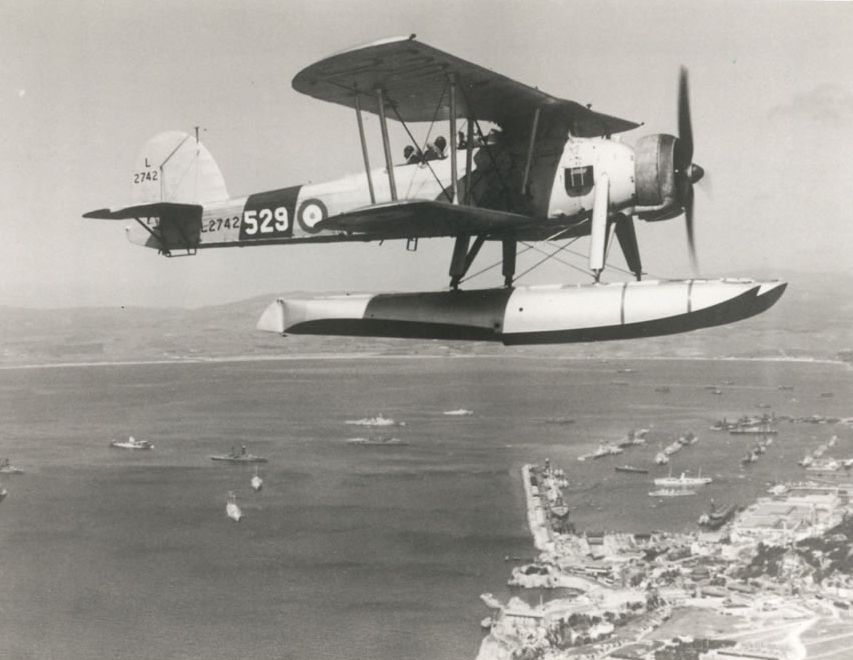
The Swordfish achieved some spectacular successes, notably the sinking of one and damaging two battleships of the Italian Navy in the Battle of Taranto and the famous crippling of the Bismarck.
On the 26th May 1941, two Swordfish strikes were launched against Bismarck from Ark Royal. The first failed to find the battleship. On the second, the Swordfish aircraft scored two hits; one did little damage, but the other jammed Bismarck 's rudders, making the warship unmaneuvrable; it sank after intense Royal Navy attack. The low speed of the attacking aircraft may have acted in their favour, as the planes were too slow for the fire-control predictors of the German gunners, whose shells exploded so far in front of the aircraft that the threat of shrapnel damage was greatly diminished. At least some of the Swordfish flew so low that most of the Bismarck's flak weapons were unable to depress enough to hit them.
 Nickname
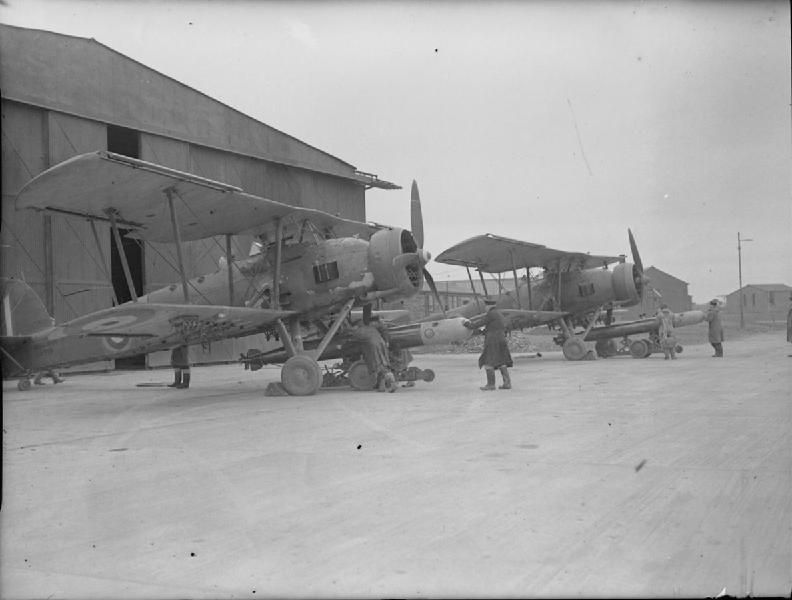
The Swordfish was nicknamed the Stringbag not because of its biplane struts, spars and braces, but because of the seemingly endless variety of stores and equipment that the aircraft was cleared to carry. Crews likened the aircraft to a housewife's string shopping bag, common at the time and which could accommodate contents of any shape. The crews felt that the Swordfish, like the shopping bag, could carry anything.
 General characteristics
Crew: Three (pilot, observer, and radio operator/rear gunner)
Length: 35 ft 8 in (10.87 m)
Wingspan: 45 ft 6 in[22] (13.87 m)
Height: 12 ft 4 in (3.76 m)
Empty weight: 4,195 lb (1,900 kg)
Loaded weight: 7,580 lb [23] (3,450 kg)
Powerplant: 1 × Bristol Pegasus IIIM.3 radial engine, 690 hp (510 kW)

Performance
Maximum speed: 143 mph with torpedo at 7,580 lb at 5,000 ft
Range: 522 miles normal fuel carrying torpedo
Endurance: 5.5 hr
Service ceiling: 16,500 ft at 7,580 lb[
Rate of climb: 870 ft/min (4.42 m/s) at sea level at 7,580 lb.
 Armament
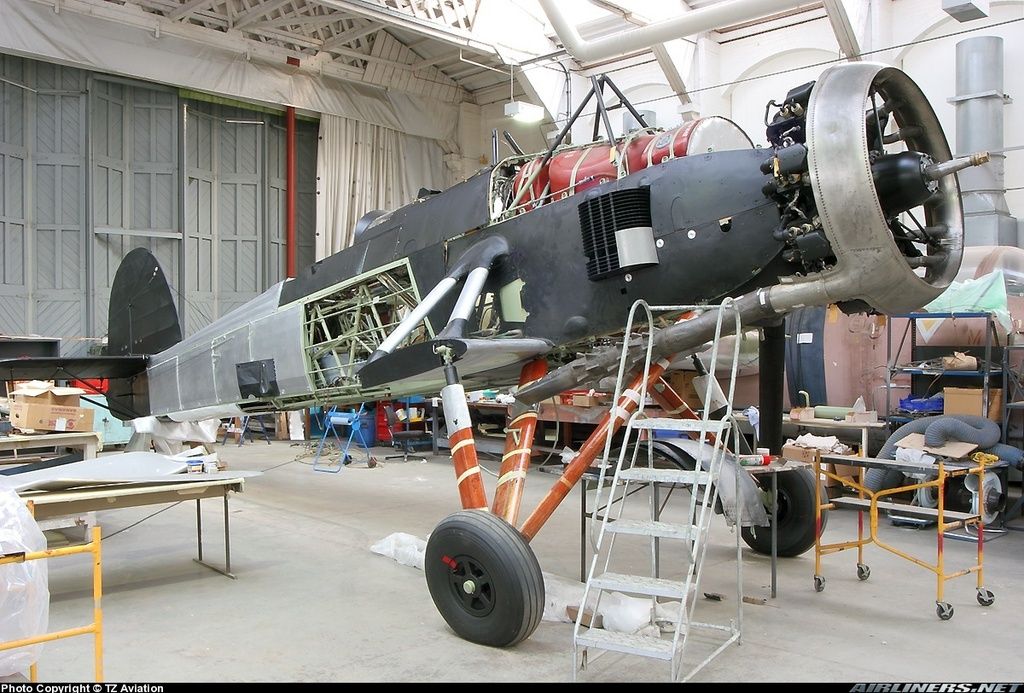
1 × fixed, forward-firing .303 in (7.7 mm) Vickers machine gun in engine cowling
1 × .303 in (7.7 mm) Lewis or Vickers K machine gun in rear cockpit
Rockets: 8 × "60 lb" RP-3 rocket projectiles (Mk.II and later)
Bombs: 1 × 1,670 lb (760 kg) torpedo or 1,500 lb (700 kg) mine under fuselage or 1,500 lb bombs under fuselage and wings.



 the tool you can see in this photo comes highly recommended it has a latex tip and is perfect for putting filler onto models. the name on the handle is 'Colour Shaper - Cup Chisel Firm' they are available at any art shop. so much better than a stiff blade





 only done this once before and it was only my second ever build done over a year ago.