

this is new one for me , i have only ever done one other ship before now , so we will see how we go.
this kit came as part of a job lot, good job because apart from my p.b.r thats all i have.


And that is it. not much to it not sure how iam going to paint the details yet .
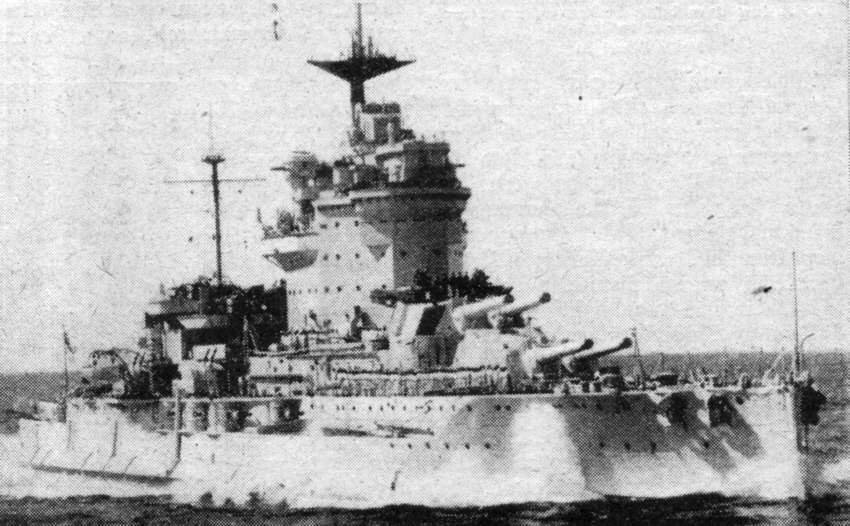
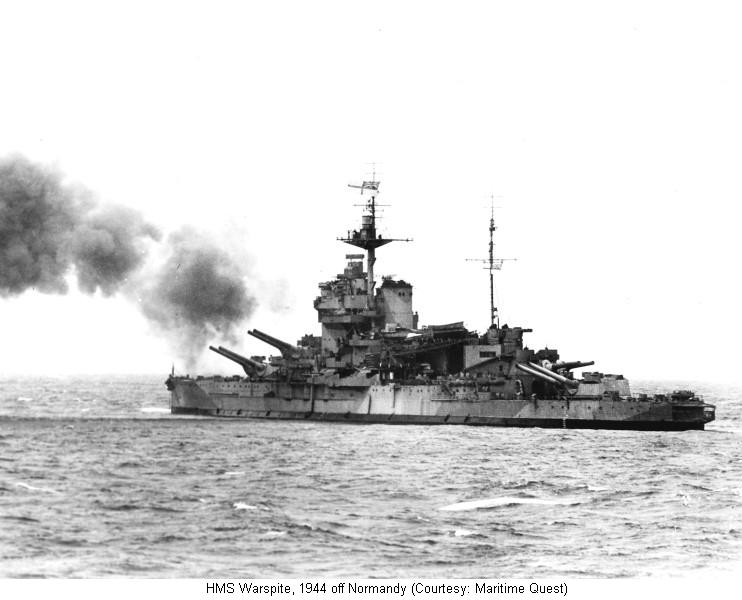
HMS Warspite was a Queen Elizabeth-class battleship built for the Royal Navy during the early 1910s. Her thirty-year career covered both world wars and took her across the Atlantic, Indian, Arctic and Pacific Oceans. She participated in the Battle of Jutland during the First World War as part of the Grand Fleet. Other than that battle, and the inconclusive Action of 19 August, her service during the war generally consisted of routine patrols and training in the North Sea.
She was involved in several major engagements, including battles in the North Sea and Mediterranean, earning her the most battle honours ever awarded to an individual ship in the Royal Navy and the most awarded for actions during the Second World War. For this and other reasons Warspite gained the nickname the "Grand Old Lady" after a comment made by Admiral Sir Andrew Cunningham in 1943 while she was his flagship.
When she was launched in 1913 the use of oil as fuel and untried 15-inch guns were revolutionary concepts in the naval arms race between Britain and Germany, a considerable risk for Winston Churchill, then First Lord of the Admiralty, and Admiral John Fisher who had advocated the design. However, the new "fast battleships" proved to be an outstanding success during the First World War. Warspite was refitted twice between the wars, but advances in technology and the cumulative effects of battle damage relegated her to the role of shore bombardment towards the end of the Second World War. Decommissioned in 1945, she ran aground under tow in 1947 on rocks near Prussia Cove, Cornwall, and was eventually broken up nearby.
First World War
Battle of Jutland (1916)
Main article: Battle of Jutland
Following the German raid on Lowestoft in April 1916, Warspite and the 5th Battle Squadron were temporarily assigned to Vice-Admiral David Beatty's Battlecruiser Force. On 31 May Warspite deployed with the squadron to fight in the Battle of Jutland, the largest naval encounter between Britain and Germany during the war. Following a signalling error, the battleships were left trailing Beatty's fast ships during the battlecruiser action, and the 5th Battle Squadron was exposed to heavy fire from the German High Seas Fleet as the force turned away to the north; although Warspite was able to score her first hit on the battlecruiser Von der Tann.
Warspite and Malaya at Jutland
Having escaped the trap the 5th Battle Squadron headed north, exchanging fire with both Hipper's battlecruiser force and the leading elements of Scheer's battleships, damaging Markgraf. When the squadron turned to join the Grand Fleet the damage from a shell hitting the port-wing engine room caused Warspite's steering to jam as she attempted to avoid her sister-ships Valiant and Malaya. Captain Phillpotts decided to maintain course, in effect circling, rather than come to a halt and reverse. This decision exposed Warspite and made her a tempting target; she was hit 13 times, but inadvertently diverted attention from the armoured cruiser Warrior, which had been critically damaged whilst attacking the leading elements of the German fleet. This action gained her the admiration of Warrior's surviving crew, who believed that Warspite's movement had been intentional.
Damage caused by a shell exploding inside the ship at Jutland
The crew regained control of Warspite after two full circles. Their efforts to end the circular motion placed her on a course which took her towards the German fleet The rangefinders and the transmission station were non-functional and only "A" turret could fire, albeit under local control with 12 salvos falling short of their target. Sub Lieutenant Herbert Annesley Packer was subsequently promoted for his command of "A" turret. Rather than continue, Warspite was stopped for ten minutes so the crew could make repairs. They succeeded in correcting the problem, but the ship would be plagued with steering irregularities for the rest of her naval career. As the light faded the Grand Fleet crossed ahead of the German battle line and opened fire, forcing the High Seas Fleet to retreat and allowing Warspite to slip away.
Warspite was holed 150 times during the battle, and had 14 killed and 16 wounded; among the latter warrant officer Walter Yeo, who became one of the first men to receive facial reconstruction via plastic surgery Although she had been extensively damaged, Warspite could still raise steam and was ordered back to Rosyth during the evening of 31 May by Rear-Admiral Hugh Evan-Thomas, commander of the 5th Battle Squadron. Whilst travelling across the North Sea the ship came under attack from a German U-boat. The U-boat fired three torpedoes, all of which missed their target. Warspite later attempted to ram a surfaced U-boat. She signalled ahead for escorts and a squadron of torpedo boats came out to meet her. They were too slow to screen her effectively, but there were no more encounters with German vessels and she reached Rosyth safely on the morning of 1 June, where it took two months to repair the damage.
Interbellum (1919–39)
Diagram of the Queen Elizabeth class published by Brassey's Naval Annual in 1923
In 1919, Warspite joined the 2nd Battle Squadron, part of the newly formed Atlantic Fleet, and undertook regular spring cruises to the Mediterranean.[ In 1924, she attended a Royal Fleet Review at Spithead, presided over by King George V. Later in the year, Warspite underwent a partial modernisation that altered her superstructure by trunking her two funnels into one, enhanced her armour protection with torpedo bulges, swapped the high-angle 3-inch guns with new 4-inch anti-aircraft guns, and removed half her torpedo tubes. After the process finished in 1926, Warspite assumed the role of flagship of the Commander-in-Chief and Second-in-Command, Mediterranean Fleet. In 1927, under the command of Captain James Somerville, she struck an uncharted rock in the Aegean and was ordered to return to Portsmouth for repairs. In 1930, Warspite rejoined the Atlantic Fleet. She was at sea when the crews of a number of warships mutinied at Invergordon in September 1931, although three sailors were later dismissed from the ship. In March 1933 she was rammed in fog by a Romanian passenger ship off Portugal, but did not require major repairs.
Between March 1934 and March 1937 she underwent a major reconstruction in Portsmouth at a cost of £2,363,000. This refit gave the Admiralty a virtually new warship, replacing internal machinery and significantly changing the battleship's appearance and capabilities.
Propulsion: The reconstruction project replaced her propulsion machinery and installed six individual boiler rooms, with Admiralty three-drum boilers, in place of 24 Yarrow boilers; geared Parsons turbines were fitted in four new engine rooms and gearing rooms. This increased fuel efficiency, reducing fuel consumption from 41 tons per hour to 27 at almost 24 knots, and gave the warship 80,000 shp. The 1,500 ton weight saving on the lighter machinery was used to increase protection and armament.
Armour: 1,100 tons of armour were added, improving coverage forward of A turret and the boiler rooms, as well as an increase to 5 inches over the magazines and 3.5 inches over the machinery. Better sub-division of the engineering rooms strengthened the hull and improved its integrity.
Armament: The last pair of torpedo tubes were removed and the 6 inch guns had their protection reduced; four guns were removed from the fore and aft ends of the batteries. Eight 4 inch high-angle guns in four twin mountings and two octuple 2 pdr pom-poms were added to her anti-aircraft defences, as well as additional .50 calibre machine guns on two of the main turrets. The original 15-inch turrets were upgraded to increase the elevation of the guns by ten degrees, providing a further 9,000 yards of range to a maximum of 32,300 yd (29.5 km) with a 6crh shell. The fire control was also modernised to include the HACS MkIII* AA fire control system and the Admiralty Fire Control Table Mk VII for surface fire control of the main armament.
Captain Victor Crutchley VC, pictured as a Rear Admiral
Additionally her superstructure was radically altered, allowing two cranes and an aircraft hangar to be fitted. This could carry four aircraft, but Warspite typically carried only two: from 1938 to 1941 these were Swordfish floatplanes and from 1942 to 1943 Walrus flying boats. Her tripod mast was removed and a distinctive armoured citadel built up to enclose the bridge and to provide space for her to operate as a flagship.
After completion of the refit Warspite was recommissioned under the command of Captain Victor Crutchley. The intention was for her to become the flagship of Admiral Dudley Pound's Mediterranean Fleet, but trials revealed problems with propulsion machinery and steering, a legacy of Jutland, which continued to beset Warspite and delayed her departure. These delays and the work required to rectify them also affected the crew's leave arrangements and led to some sailors airing their views in national newspapers, angering Pound. Warspite finally entered Grand Harbour, in Malta, on 14 January 1938 and continued gunnery practice and training. At the end of one anti-aircraft exercise, a junior midshipman independently discharged his pom-pom gun after a towing aircraft flew low overhead to display its attached target to the crew. Warspite had turned towards Valletta on the exercise's conclusion and the shells hurtled towards the city. The shells landed harmlessly at a gunnery range where a platoon of the Green Howards was exercising. For the remainder of the year she cruised the Aegean, Adriatic and Mediterranean seas, leading an intensive series of fleet exercises in August due to rising international tension She undertook another cruise of the western Mediterranean in the spring of 1939. In June 1939, Vice Admiral Andrew Cunningham replaced Dudley Pound and took Warspite to Istanbul for talks with the Turkish government. When war was declared in September the Mediterranean remained quiet and Warspite was recalled to join the Home Fleet following the loss of HMS Royal Oak.
Second World War
Atlantic and Narvik (1939–40)
Main article: Battles of Narvik
Warspite engaging shore batteries during the Second Battle of Narvik
Warspite's first task was to escort convoy HX9 carrying fuel from Nova Scotia to the UK. She was diverted northwards in pursuit of the German battleships Scharnhorst and Gneisenau which had sunk the armed merchant cruiser Rawalpindi north of the Faroe Islands, but failed to make contact.
In April 1940, Warspite had started her voyage back to the Mediterranean when the Germans invaded Denmark and Norway; she rejoined the Home Fleet on 10 April and proceeded towards Narvik. On 13 April, Vice-Admiral William Whitworth hoisted his flag in Warspite and led nine destroyers, three sweeping mines and six in an offensive role, into Ofotfjord to neutralise a force of eight German destroyers trapped near the port of Narvik.] Her Fairey Swordfish float-plane sank the German U-boat U-64 with 250 lb bombs, becoming the first aircraft to sink a U-boat in the war. The Swordfish continued to provide accurate spotting reports during the early afternoon which were, arguably, more important to the course of the battle than the Warspite's guns. The British destroyers soon opened fire on their counterparts, which had almost exhausted their fuel and ammunition following the First Naval Battle of Narvik. All were sunk during the action. Warspite destroyed the heavily-damaged Z13 Erich Koellner with broadsides, while damaging Z17 Diether von Roeder and Z12 Erich Giese. Diether von Roeder had to be scuttled while Erich Giese was sunk in conjunction with destroyers. Although the Second Naval Battle of Narvik was considered a success, Warspite was lucky to escape unscathed given the number of submarines and other torpedo-armed enemy warships present in the narrow confines of the Norwegian fjords. She remained in Norwegian waters, participating in several shore bombardments around Narvik on 24 April, but these proved ineffectual and she returned to Scapa Flow prior to being redeployed to the Mediterranean on 28 April.

I would like to thank paul for his vid on gbs and sigs it is a great help for me when doing the pictures thanks paul

thats it for now .
thanks for coming


 so yes why not if i have a small enough drill bit.







 don't know how, but I've somehow missed seeing this build until now


