History
The MINI is one of those special cars that gets to define the vehicle class it belongs to. What makes it even more individual is that it was awarded the “European Car of the Century”. Let’s have a closer look on how the MINI became the car it is today.
The MINI was the small car icon of the 1960s. It was produced by BMC (British Motor Corporation) starting in 1959 and was the first car to come with front-wheel-drive. This space saving solution went on to influence all the manufacturers and nowadays FWD is the most popular drive-train layout.
The new BMW MINI was launched in 2001 with a completely new design from the BMW design team. Since then it rekindled the worldwide sales of mini, averaging around 250,000 MINI sold worldwide.
In 2006 BMW completely redesigned the MINI to meet stricter NCAP European safety standards and ratings. Every piece of bodywork was redesigned and different to the 2001 BMW MINI model , but if you visually compared the new 2006 MINI model, side by side to the 2001 MINI model there would be very little obvious difference between the two, with BMW choosing to adhere as closely as possible to the first classic MINI design.
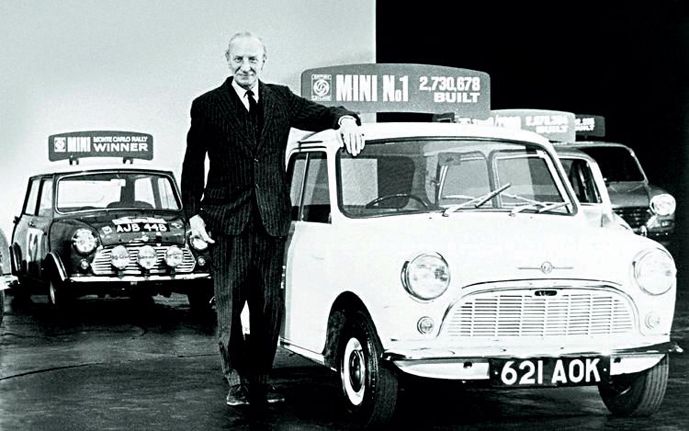
The revolutionary design of the MINI was created by Sir Alec Issigonis (1906–1988) (see photo below), considered a visionary in industrial transportation. The MINI was intended as an affordable vehicle in response to the 1956 Suez oil crisis. Along its production period, the MINI was built at the Cowley plants in the United Kingdom, and afterwards in Australia, Belgium, Chile, Italy, Portugal, South Africa, Spain, Uruguay and Venezuela. Today's BMW MINI is manufactured mainly at the MINI manufacturing plant near Oxford, England.
The first MINI, called the Mk I had three important updates: The Mk II, the MINI Clubman, and the Mk III. Sportier versions were the MINI Cooper and the MINI Cooper S (S standing for Special), that got to successful as rally cars. MINI even won the Monte Carlo Rally three times.
 Mini Design and Development
The MINI was designed as a result of the 1956 Suez Crisis, which reduced oil supplies, and forced the UK government to introduce petrol rationing. Obviously, the sales of large cars, with high fuel consumption dropped and the market for so called “bubble cars”, including the MINI boomed.
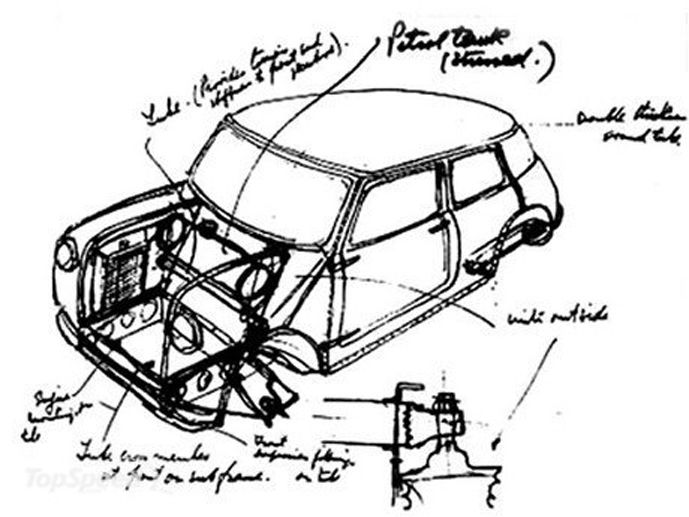
BMC realized that they had to produce a small vehicle quickly. Issigonis, had a reputation for been gighly skilled in designing small vehicles was assigned to this task of creating a small, economical car. Together with a small team of designers Issigonis got to produce the original prototype of the MINI by October 1957. Originally called the New Market (as it was aimed at a New Market in the car industry), the name was soon dropped and changed to the MINI, a name reflecting its size and ecumenical prowess. The MINI used a conventional BMC four-cylinder water-cooled engine, mounted transversely with a four-speed gearbox transmission placed in the sump, and with FWD (Front Wheel Drive).
Mini Early Sketch
All of the MINIs smart technical novelties produced a car with minimum overall dimensions and maximized space for passengers and luggage.
Other MINI enhancements included the mounting of the carburettor at the back of the MINI engine. This allowed for an extra reduction gear to be mounted between the engine and the transmission to reduce loads on the gearbox and prevent rapid wear. The MINI engine had 51.7 cubic inches and offered an excellent a top speed for this type of a car of 72 mph.
Although the MINI’s design had utilitarian origins, the shape of the classic model became so iconic that Rover Group (the heirs to BMC) registered the MINI and its shape as a trademark in the early 1990s.
The above information was courtesy of
http://www.johncooperworks.net/history-mini-forum.html
Why I chose this kit to build
I have always been a fan of the mini, since I was a little kid. My parents had as the family car a cooper mini, which had fat tyres and cool racing steering wheel but unfortunately there doesn't seem to be a photo to show.
Last year a team of racing enthusiasts from my home town in Nelson, New Zealand took a modified 64 mini to Bonneville and broke the speed record for a production car under 1000cc at an average speed of 235.9km/h.
This was in the best tradition of Burt Munro of Fastest Indian fame. Burt's grandson him self was also invited to launch the project, only fitting
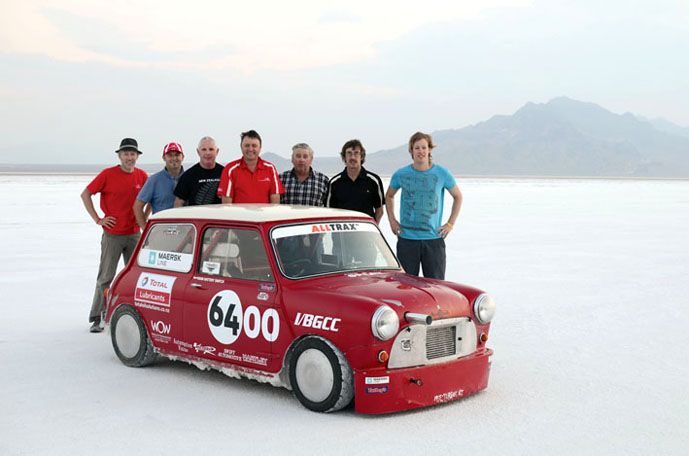
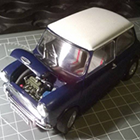
I plan to build this kit pretty much out of the box with a few bits of added detail. This will be practice of skills for when I attempt to build a replica of the Project 64 Mini
Hope you stay tuned










 so il be picking up a few tips from you